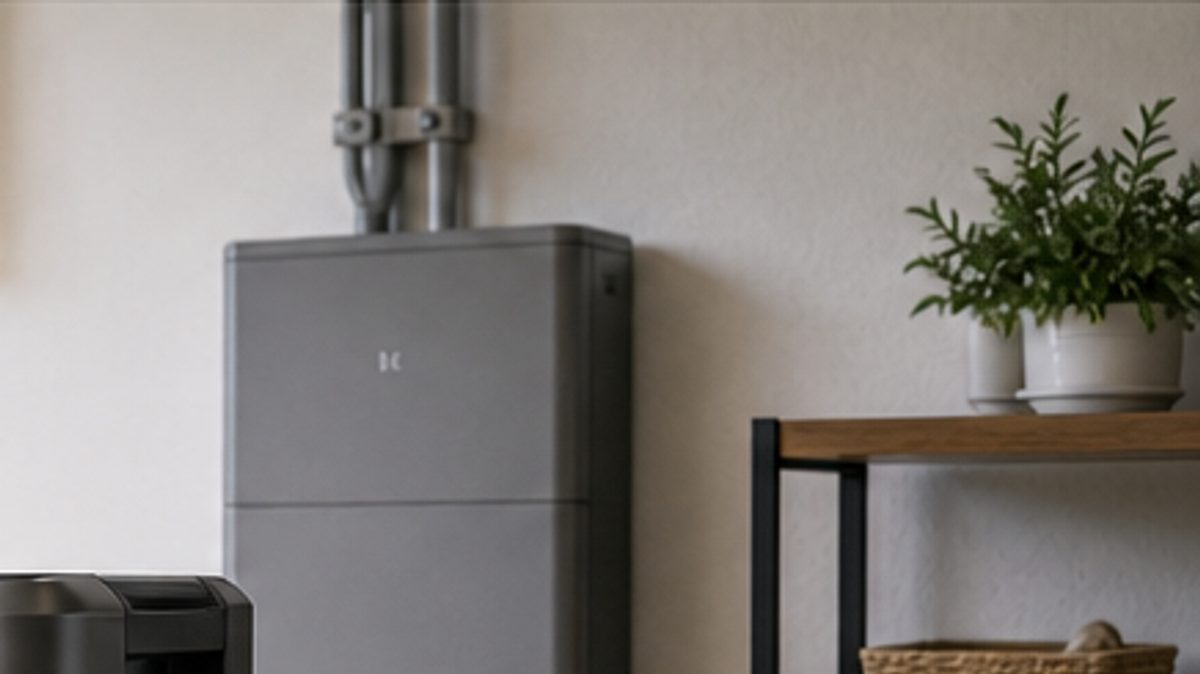
How much backup capacity does your home actually need?
A formula and one set of stated assumptions to size home backup: daily watt-hours, conversion loss, reserve, and runtimes for 1, 2, 3.6 and 5 kWh units.

How this guide was built
Prices come from Canadian portable power and home backup retailers and are refreshed on a regular schedule. The price at the retailer is the one that counts, so confirm it before you buy.
The kits and picks in a guide are chosen by our team to match its examples, not paid placements. Specifications come from manufacturers, so check the current manual before you buy.
"How big a battery do I need?" comes down to one formula and a few honest assumptions. This guide states every assumption once, builds each example from them, and shows the reserve and the conversion loss as separate steps, so you can swap in your own numbers.
The formula
- Daily energy (Wh/day) = the sum, over every appliance you want to run, of average watts × hours per day.
- Rated battery capacity needed (Wh) = daily energy ÷ 0.85 ÷ 0.80, which is about daily energy × 1.47, for each day you want to cover.
- Inverter output needed (W) = the largest combination of things that can be running at once, with surge headroom above the biggest motor start.
Steps 1 and 2 answer "how long". Step 3 answers "will it start". They are separate questions, and a unit can pass one and fail the other.
The assumptions behind every number below
| Assumption | Value used here | Why |
|---|---|---|
| Average watts | Running watts × the share of time the appliance is actually drawing | A fridge compressor cycles on and off, so its average is far below its running watts |
| Conversion loss | 15% (divide by 0.85) | The inverter turns battery DC into household AC and loses some energy doing it. Manufacturers publish efficiency figures that vary by model; 0.85 is a cautious planning value, not a measurement |
| Reserve | 20% held back (multiply by 0.80) | A planning margin so an outage that runs long does not take the battery to empty. It is a choice, not a defect, and it is separate from conversion loss |
| Planning energy from a rated capacity | Rated Wh × 0.85 × 0.80 = 0.68 × rated Wh | The two corrections combined |
If you would rather run the battery down to empty in an emergency, drop the reserve: delivered AC energy is then rated Wh × 0.85.
Step 1: find your average watts
Two numbers describe a load: running watts while it draws power, and surge watts, the brief spike when a motor or compressor starts. Daily energy uses average watts, so cycling loads need one extra step: average watts = running watts × duty cycle.
For a refrigerator or freezer you do not have to estimate. The EnerGuide label states yearly energy use, so daily Wh = label kWh per year ÷ 365 × 1,000. For a sense of scale, Natural Resources Canada reports that the average refrigerator shipped in Canada used 430 kWh per year in 2009 (NRCan appliance statistics). This guide uses a fridge labelled about 394 kWh per year: 394 ÷ 365 × 1,000 ≈ 1,080 Wh per day, an average of 45 W over 24 hours. A "150 W fridge" on a nameplate is its running draw, not its average, and 150 W × 24 h = 3,600 Wh would overstate the daily energy by more than three times.
Where there is no label, a plug-in power meter measures real draw for a few dollars. Measure where you can.
Step 2: the worked example
Every row uses the assumptions above. The loads are examples, not recommendations.
| Load | Average watts | Hours per day | Wh per day | Basis |
|---|---|---|---|---|
| Refrigerator | 45 | 24 | 1,080 | EnerGuide label of about 394 kWh per year |
| Wi-Fi router and modem | 25 | 24 | 600 | Assumed combined draw; measure yours |
| Six LED lights | 48 (6 × 8 W) | 5 | 240 | Assumed 8 W bulbs |
| Phones and a laptop | not applicable | not applicable | 100 | Assumed: two phone charges and one laptop charge |
| Essentials total | about 84 | 2,020 | Scenario A | |
| Freezer | 34 | 24 | 820 | Example EnerGuide label of 300 kWh per year |
| Essentials plus freezer | about 118 | 2,840 | Scenario B | |
| Sump pump | 700 while running | 2 minutes per hour | 560 | Assumed 700 W pump; check your nameplate |
| Furnace blower | 300 | 8 | 2,400 | Example: a 300 W blower running 8 hours a day; check yours |
| Winter, everything | about 242 | 5,800 | Scenario C |
Now apply step 2, daily energy ÷ 0.85 ÷ 0.80:
| Scenario | Daily energy | Rated capacity needed per day of outage |
|---|---|---|
| A: essentials | 2,020 Wh | about 2,970 Wh |
| B: essentials plus freezer | 2,840 Wh | about 4,180 Wh |
| C: winter, everything | 5,800 Wh | about 8,530 Wh |
What each capacity tier runs
Runtime = rated Wh × 0.68 ÷ average watts, from the same assumptions (reserve held back). Higher numbers need a bigger unit, a smaller load, or running the reserve down.
| Rated capacity | Planning AC energy | Fridge alone (45 W) | Scenario A (84 W) | Scenario B (118 W) |
|---|---|---|---|---|
| 1,000 Wh | 680 Wh | about 15 hours | about 8 hours | about 6 hours |
| 2,000 Wh | 1,360 Wh | about 30 hours | about 16 hours | about 11 hours |
| 3,600 Wh | 2,448 Wh | about 54 hours | about 29 hours | about 21 hours |
| 5,000 Wh | 3,400 Wh | about 76 hours | about 40 hours | about 29 hours |
How to read it: a 1 kWh unit is a short-outage tool for a fridge and a few small loads. Around 3.6 kWh covers essentials for roughly a day. Scenario C, with furnace and sump running, needs more than any single tier in the table delivers per day, which is where expansion batteries or a different heating plan come in. Solar input can stretch runtime; see the solar pairing guide.
Step 3: surge, not just capacity
Capacity tells you how long things run. The inverter's continuous and surge output tells you whether they start at all. A fridge that averages 45 W still needs far more than that for the instant its compressor starts, and if the fridge and sump pump start together the spikes add. Read the surge figure on each appliance's label or manual, add the worst realistic simultaneous starts, and make sure the inverter's surge rating is above that total.
Resistive heat is the exception to avoid. A 1,500 W space heater or kettle draws 1,500 ÷ 0.85, about 1,760 Wh from the battery every hour, so it empties almost any portable unit in a couple of hours for little benefit.
Medical and life-support equipment
If anyone relies on electrically powered medical equipment, a portable power station is not a substitute for a medical-grade backup plan. Take the device's watts from its manual, follow its manufacturer's guidance on batteries and power converters (for example, ResMed publishes battery and power converter information for its CPAP devices), and talk to your clinician or equipment supplier about an outage plan. Do not assume a power station is compatible because the numbers add up.
Where plug-in backup ends and installation begins
Extension cords from a power station to individual appliances need no electrician. Powering circuits, such as a furnace, well pump or hardwired sump pump, means connecting to the building's wiring. That requires a transfer switch or interlock installed to the Canadian Electrical Code (CSA C22.1), normally by a licensed electrician, with a permit and inspection where your province requires one. Connecting a power source to a panel without one can energize utility lines and put line workers at risk. Check your provincial regulator, for example ESA in Ontario or Technical Safety BC, and your utility.
Large 240 V loads (well pumps, central air, electric ranges) need a unit with 240 V output; some larger systems offer it, and some pair two units with a manufacturer-specific kit. If whole-home coverage is the long-term goal, buy into an expandable platform and read the buying guide for how platforms differ.
Kits that match these examples
Best options · priced live
Home backup picks
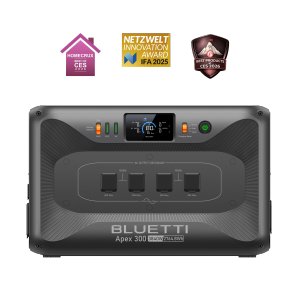
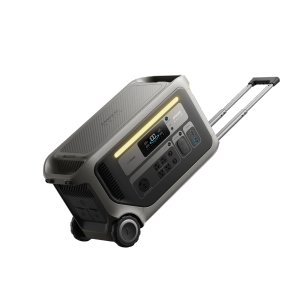

Choose one. Prices are per option.
Sources and notes
- Refrigerator energy: Natural Resources Canada, appliance statistics (average 430 kWh per year for 2009 shipments); and the EnerGuide label on your own appliance.
- Conversion efficiency (0.85) and reserve (20%) are this guide's planning assumptions, stated above, not measurements. Check a specific unit's published inverter efficiency and its usable-capacity rating.
- All appliance wattages marked "assumed" or "example" are illustrations. Replace them with your labels and meter readings.
- Wiring rules: Canadian Electrical Code (CSA C22.1) and your provincial electrical safety authority.
See a deal you like? Set a target price.
We'll watch it at Canadian power retailers and email you when it drops.
Track a price on any product
Explore More Guides
Shop Related Deals
Get notified about new guides
We publish guides on choosing a power station, sizing home backup, and pairing solar panels. Subscribe to be told when one is added. No spam, unsubscribe anytime.
Sent by powerstations.ca · powerstations.ca