
Jackery · Portable Power Stations
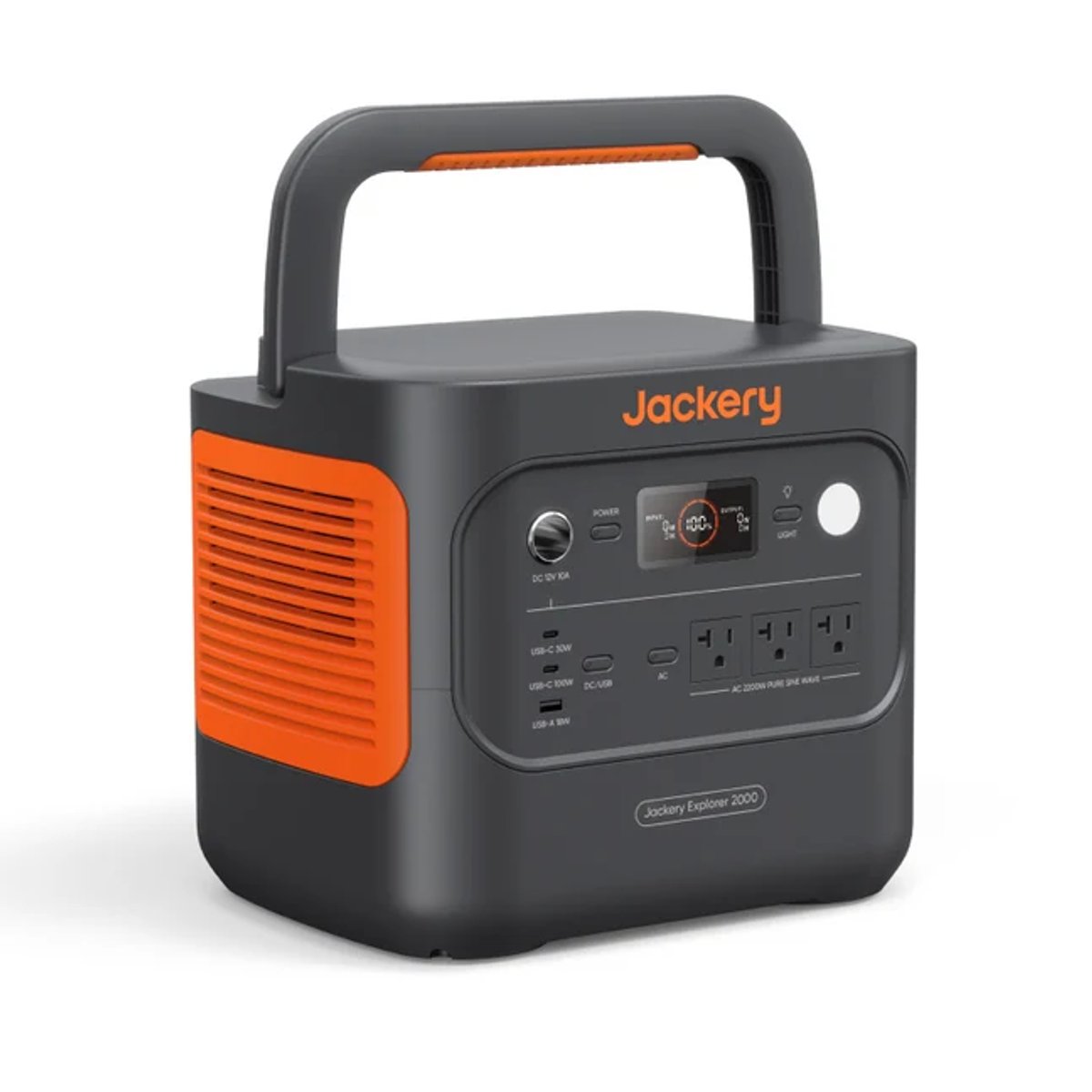
Jackery Explorer 2000 v2 Portable Power Station
$1,099.00
$2,599.00Save $1,500.00 (58%)
at Jackery Canada
Price checked Oct 25, 2026
Key specs
- Rated battery capacity
- 2042 Wh
- Continuous output
- 2200 W
- LiFePO4 chemistry
- Yes
- Weight
- 17.9 kg
- Warranty
- 5 years
Example runtimes
- Refrigeratorabout 31 hours
- Freezerabout 41 hours
- Wi-Fi router and modemabout 56 hours
Assumes 85% inverter efficiency and a 20% reserve (rated Wh × 0.68). Your appliances will differ; see the sizing guide.

Key specs
- Rated battery capacity
- 2042 Wh
- Continuous output
- 2200 W
- LiFePO4 chemistry
- Yes
- Weight
- 17.9 kg
- Warranty
- 5 years
Example runtimes
- Refrigeratorabout 31 hours
- Freezerabout 41 hours
- Wi-Fi router and modemabout 56 hours
Assumes 85% inverter efficiency and a 20% reserve (rated Wh × 0.68). Your appliances will differ; see the sizing guide.
Price tracked since Oct 25
Is this a good deal?
- The current price took effect within the last day.
- Across the 18 Portable Power Stations deals we’re tracking right now, the median discount is 36% — this deal’s 58% off is well above that mark.
Based on prices we’ve recorded from Jackery Canada since October 2026, refreshed several times daily.
About this product
The Jackery Explorer 2000 v2 is a portable power station built around a 2042Wh LiFePO4 battery cell chemistry, delivering 2200W of continuous AC output across two outlets. At 17.9 kg, it is notably compact for its class, with Jackery citing a 40% reduction in size and 34% reduction in weight compared to prior designs. The integrated UPS function switches over in 20 milliseconds or less, making it suitable for keeping computers, network equipment, refrigerators, and other sensitive loads running without interruption. A full charge can be completed in approximately 1.7 hours using the Emergency Super Charge mode. Jackery's CTB (Cell to Body) honeycomb construction contributes to both structural efficiency and thermal safety, while the ChargeShield 2.0 system adds a layer of charging protection. A companion mobile app allows remote monitoring and control. The LiFePO4 chemistry is rated for more than 10 years of service life, and the unit carries a 5-year total warranty. An optional Extreme Kit extends cold-weather operability down to -40 degrees Fahrenheit.
- Category
- Portable Power Stations
- Brand
- Jackery
- Material
- The smallest, lightest home backup power: 40% smaller, 34% lighter at just 17.9kg.
- Size
- The smallest, lightest home backup power: 40% smaller, 34% lighter at just 17.9kg.
- Type
- Portable Power Station
What people are saying
Reviewers consistently praise the Jackery Explorer 2000 v2 for its impressive portability at just 39.5 lbs, making it notably lighter and more compact than competing 2kWh power stations. The LiFePO4 battery, rated for 4,000 cycles and roughly 10 years of use, draws frequent commendation, as does the fast AC recharge time of around 1.7 hours. Real-world performance running appliances like coffee makers, fridges, and camp gear is widely described as reliable and quiet. The intuitive interface and app control are generally well-received. The most common criticisms are the 400W maximum solar input, which reviewers call limiting for a battery of this size, the non-expandable battery capacity, the use of proprietary DC connectors, and occasional complaints about the companion app lagging.
Specifications
- Rated battery capacity
- 2042 Wh
- Continuous output
- 2200 W
- LiFePO4 chemistry
- Yes
- Weight
- 17.9 kg
- UPS switchover
- 20 ms
- Expandable
- No
- AC outlets
- 2
- Warranty
- 5 years
Related Guides
How much backup capacity does your home actually need?
A formula and one set of stated assumptions to size home backup: daily watt-hours, conversion loss, reserve, and runtimes for 1, 2, 3.6 and 5 kWh units.
Pairing solar panels with your power station
Check voltage, current, power, polarity and connector before you connect panels, then size panel watts for Canadian sunshine with stated assumptions.
How to choose a portable power station in Canada (2026)
A checklist and the numbers that matter: rated capacity, delivered energy, inverter output, chemistry, safety certification, solar input and cold limits.
More Portable Power Stations Deals
 55%
Anker SOLIX F3000 + Expansion Battery
$2,999.00
 54%
Anker SOLIX C2000 Gen 2 Portable Power Station - 2,048Wh | 2,400W
$1,099.00
 51%
Anker SOLIX F3000 Portable Power Station - 3,072Wh | 3,600W
$1,899.00
 48%
EcoFlow DELTA 3 Max Series Portable Power Station (2048Wh)
$1,099.00
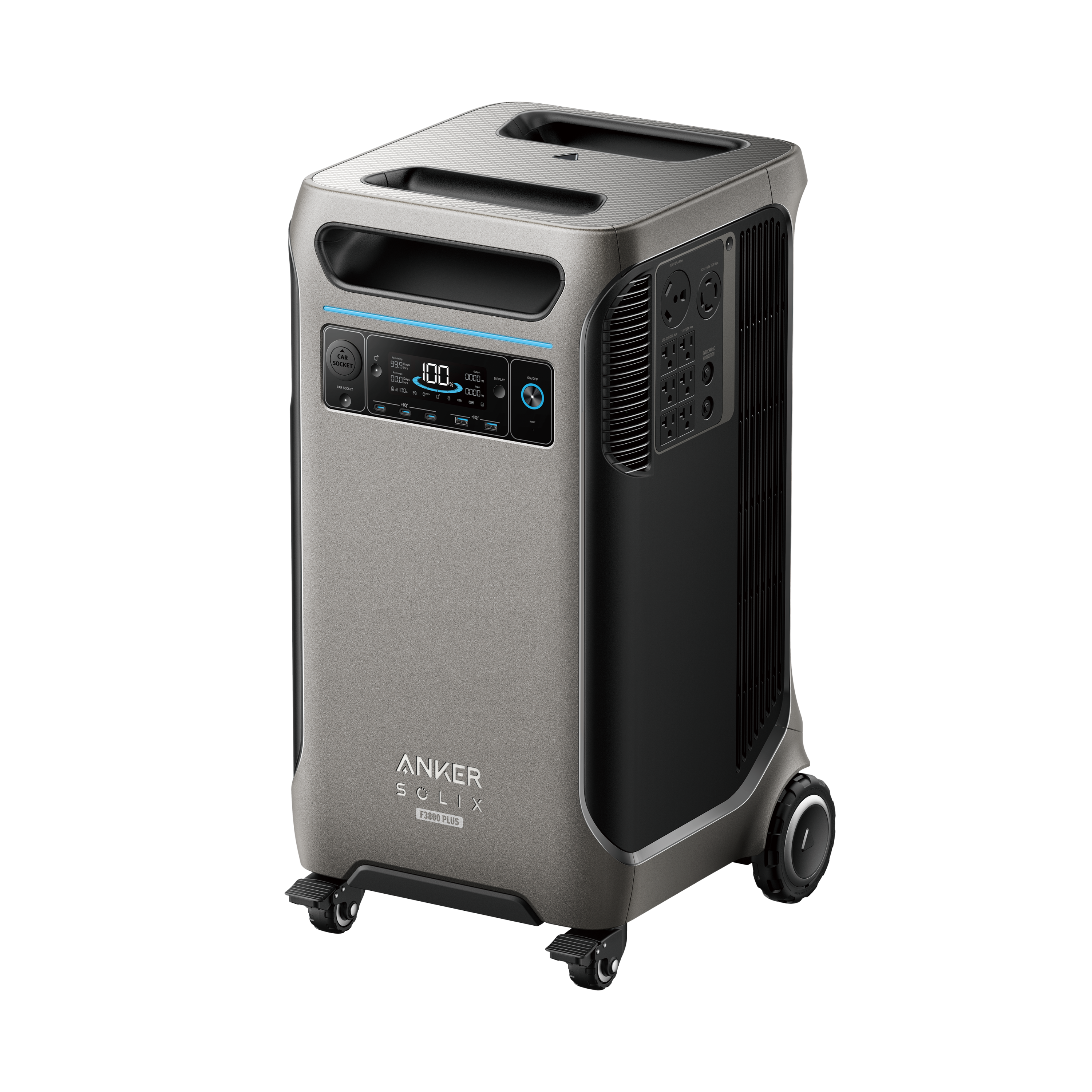 44%
Anker SOLIX F3800 Plus Portable Power Station
$3,299.00
 44%
Anker SOLIX F3800 Portable Power Station - 3,840Wh | 6,000W
$2,699.00