
BLUETTI · Portable Power Stations
Apex 300 Versatile Power Station | 3,840W, 2,764.8Wh - Apex 300
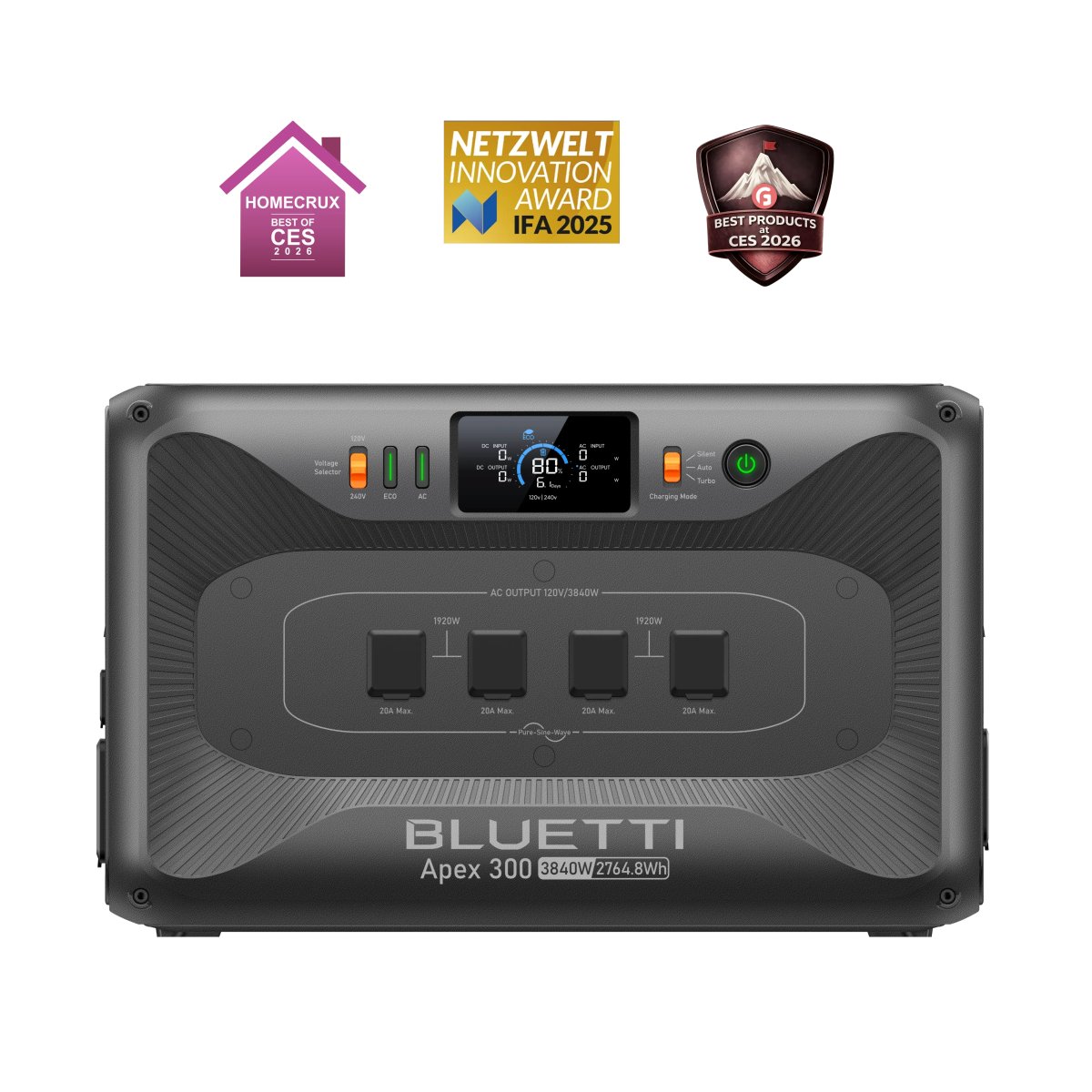
$1,999.00
$2,199.00Save $200.00 (9%)
at Bluetti Canada
Price checked Oct 26, 2026
Key specs
- Rated battery capacity
- 2764.8 Wh
- Continuous output
- 3840 W
- Surge output
- 7680 W
- LiFePO4 chemistry
- Yes
- Weight
- 38 kg
- Warranty
- 5 years
Example runtimes
- Refrigeratorabout 42 hours
- Freezerabout 55 hours
- Wi-Fi router and modemabout 75 hours
Assumes 85% inverter efficiency and a 20% reserve (rated Wh × 0.68). Your appliances will differ; see the sizing guide.

Key specs
- Rated battery capacity
- 2764.8 Wh
- Continuous output
- 3840 W
- Surge output
- 7680 W
- LiFePO4 chemistry
- Yes
- Weight
- 38 kg
- Warranty
- 5 years
Example runtimes
- Refrigeratorabout 42 hours
- Freezerabout 55 hours
- Wi-Fi router and modemabout 75 hours
Assumes 85% inverter efficiency and a 20% reserve (rated Wh × 0.68). Your appliances will differ; see the sizing guide.
Price tracked since Oct 25
Is this a good deal?
- The current price took effect within the last day.
- Across the 18 Portable Power Stations deals we’re tracking right now, the median discount is 36% — this deal’s 9% off is below that mark.
Based on prices we’ve recorded from Bluetti Canada since October 2026, refreshed several times daily.
About this product
The BLUETTI Apex 300 is a high-capacity portable power station built around a 2,764.8Wh lithium iron phosphate (LFP) battery, delivering 3,840W of continuous AC output with a 7,680W surge ceiling. LFP chemistry contributes to a rated cycle life of 6,000 charges, and the expandable design allows capacity to grow as needs change. Two AC outlets supply pure sine wave power, making the unit suitable for sensitive electronics, while the USB-C port outputs up to 100W for fast device charging. A standout feature is the zero-millisecond UPS switchover, which keeps connected loads running without interruption during a power transition. At 38 kg, the Apex 300 is substantial but manageable for home backup, RV use, and off-grid setups. A 5-year warranty backs the unit, reflecting confidence in its long-term durability. For buyers comparing portable power stations in the 2,700Wh-plus class, the combination of high surge capacity, expandability, and LFP longevity makes this a well-rounded option.
- Category
- Portable Power Stations
- Brand
- BLUETTI
- Type
- Portable Power Station
What people are saying
Reviewers consistently praise the BLUETTI Apex 300 for its exceptional expandability (scaling from 2.7kWh up to 58kWh), impressive 3,840W output capable of running heavy appliances, and remarkably fast AC charging (0 to 80% in roughly 45 minutes). Its dual 120V/240V output, 0ms UPS switching, quiet fan operation, and durable LiFePO4 battery (rated for 6,000 cycles) are frequently highlighted as standout strengths. The most common criticism across expert and forum reviewers is the complete absence of built-in DC and USB ports, requiring a separate paid accessory to add that functionality. The unit's substantial weight (around 84 pounds) is a recurring complaint, making it impractical to move without help. Some users also flag the low 60V solar input voltage limit as incompatible with common rooftop panel setups, and a few report firmware bugs affecting solar detection.
Specifications
- Rated battery capacity
- 2764.8 Wh
- Continuous output
- 3840 W
- Surge output
- 7680 W
- LiFePO4 chemistry
- Yes
- Cycle life
- 6000 cycles
- Weight
- 38 kg
- UPS switchover
- 0 ms
- Expandable
- Yes
- AC outlets
- 2
- USB-C PD
- 100 W
- Pure sine wave AC
- Yes
- 12 V DC output
- No
- Warranty
- 5 years
Related Guides
How much backup capacity does your home actually need?
A formula and one set of stated assumptions to size home backup: daily watt-hours, conversion loss, reserve, and runtimes for 1, 2, 3.6 and 5 kWh units.
Pairing solar panels with your power station
Check voltage, current, power, polarity and connector before you connect panels, then size panel watts for Canadian sunshine with stated assumptions.
How to choose a portable power station in Canada (2026)
A checklist and the numbers that matter: rated capacity, delivered energy, inverter output, chemistry, safety certification, solar input and cold limits.
More Portable Power Stations Deals
 58%
Jackery Explorer 2000 v2 Portable Power Station
$1,099.00
 55%
Anker SOLIX F3000 + Expansion Battery
$2,999.00
 54%
Anker SOLIX C2000 Gen 2 Portable Power Station - 2,048Wh | 2,400W
$1,099.00
 51%
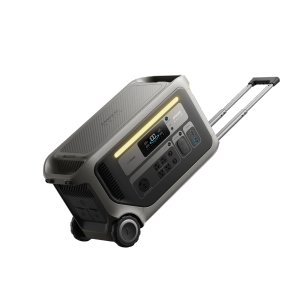
Anker SOLIX F3000 Portable Power Station - 3,072Wh | 3,600W
$1,899.00
 48%
EcoFlow DELTA 3 Max Series Portable Power Station (2048Wh)
$1,099.00
 48%
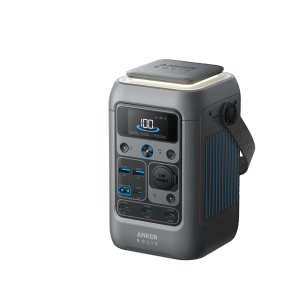
Anker SOLIX C300 DC Portable Power Station - 288Wh (90,000mAh) | 300W
$232.99